How To Calculate Cost Per Wear Before Buying A Coat
A practical step-by-step guide to how to calculate cost per wear before buying a coat, including preparation, instructions, common issues, tips, and next steps.
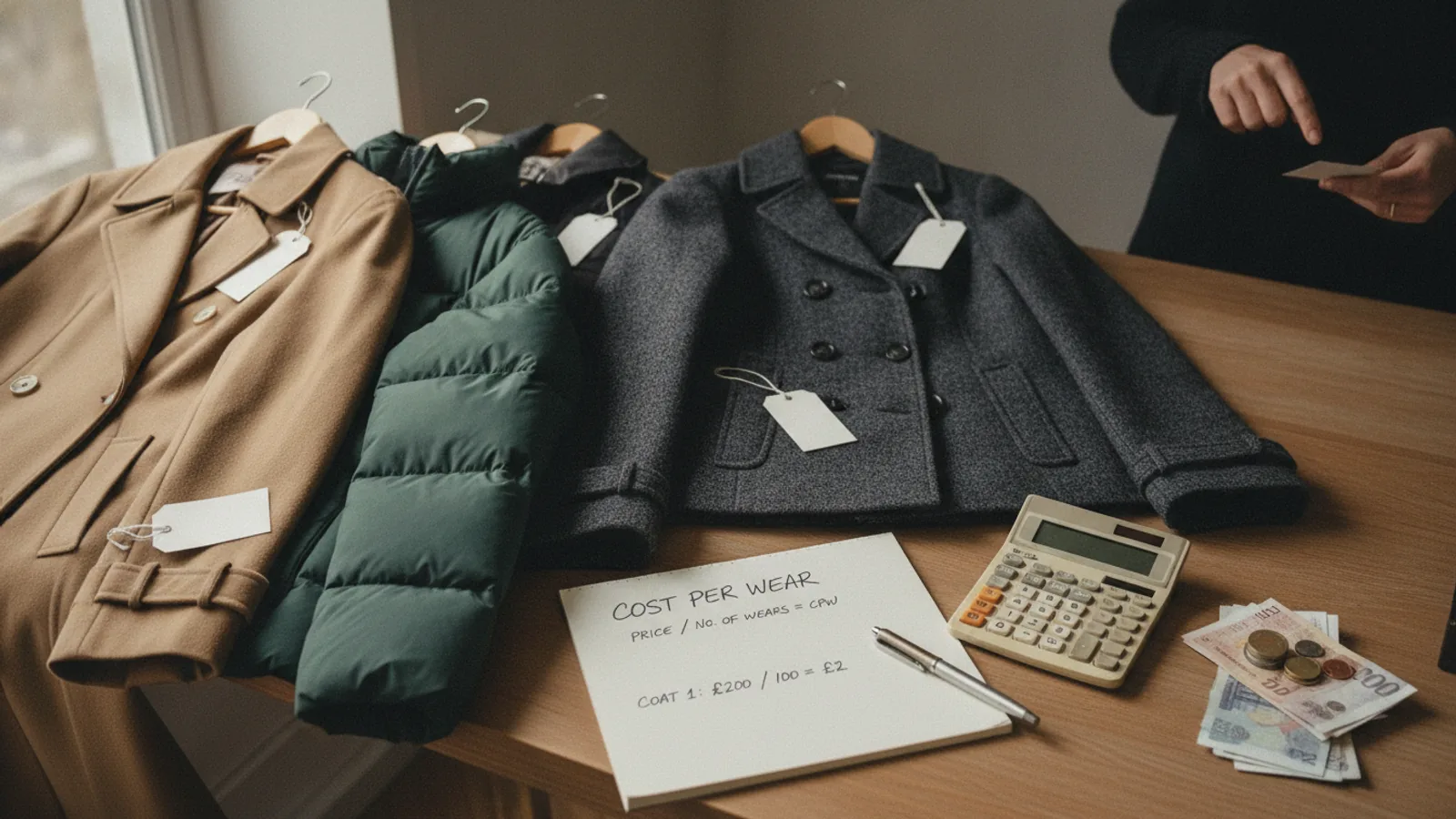
How To Calculate Cost Per Wear Before Buying A Coat
Calculating the cost per wear of a coat before you buy it is a practical method for evaluating its true value over time. This metric shifts your focus from the initial price tag to the long-term utility and durability of the garment, helping you make more informed and sustainable purchasing decisions. By estimating the total wears over a coat's lifespan, you can determine if a higher-quality, more expensive piece is actually the more economical choice.
Fast Answer
- To find the cost per wear, divide the coat's total price (including tax, shipping, and maintenance) by the estimated number of times you'll wear it.
- A lower cost per wear signifies better long-term value, helping you invest wisely in items you will use frequently for many years.
Before You Start
- Clearly define the coat's intended purpose: daily wear, formal events, or specific weather conditions.
- Research the coat's materials and construction to make an educated guess about its potential lifespan.
- Evaluate your current wardrobe and personal style to ensure the coat will be a versatile and frequently used piece.
- Determine the coat's final price, including taxes, shipping, and an estimate for future maintenance like dry cleaning.
Step-by-Step Instructions
Determine the Coat's Total Cost
The first move is to establish the coat's true, total cost, which often extends beyond the number on the price tag. Begin with the listed retail price. Next, account for any sales tax that will be added at checkout, as this can be a significant addition. If you are purchasing the item online, be sure to include any shipping and handling fees. Finally, and this is a commonly overlooked part, consider future maintenance. Check the coat’s care label. If it requires professional dry cleaning, estimate how many times you might need this service per season and multiply that by a typical cleaning cost. Sum all of these figures—the retail price, taxes, shipping, and total estimated maintenance—to arrive at your total investment. As a practical check, visit the checkout page online to see the final price with tax and shipping before committing. This check matters because starting with an incomplete cost will skew your final cost-per-wear figure, making a seemingly affordable coat appear more valuable than it truly is.
Estimate the Coat's Lifespan in Years
Your next task is to realistically estimate the coat's functional lifespan in years. This isn't about when it will go out of style, but how long it will physically hold up to wear. A high-quality wool, leather, or down-filled coat with excellent construction could reasonably last for a decade or more with proper care. A less expensive, fast-fashion item made from lower-grade synthetic materials might only be wearable for one or two seasons before showing significant signs of wear like pilling, seam splitting, or a broken zipper. To make an informed estimate, research the materials. Learn about the durability of different fabrics and the reputation of the hardware used. The action here is to assign a specific number of years. For a practical check, search for online reviews of the specific coat or brand, paying close attention to comments about long-term durability. This check is crucial because a coat's longevity is a primary multiplier for its total potential wears.
Estimate Wears Per Year
Now, you must honestly estimate how many times you will actually wear the coat each year. This is where personal habits and environment play the biggest role. Start by considering your local climate. How long is the appropriate season for this specific type of coat? Next, think about your daily routine. Will you wear it for your commute, on weekends, or only for special occasions? Be careful not to fall into aspirational thinking. The action is to come up with a number of wears per week or month during the relevant season, and then multiply accordingly. For example, wearing a coat four times a week for a four-month winter season results in about 64 wears per year. For a practical check, look at your current coat-wearing behavior. How many times did you wear your main winter coat last week? This check matters because overestimating your usage is the most common error in this process, leading to a misleadingly low cost-per-wear figure.
Calculate Total Lifetime Wears
This step combines your previous two estimates to determine the total number of times you expect to wear the coat over its entire life. The action is a simple multiplication: take the estimated lifespan in years (from step 2) and multiply it by your estimated wears per year (from step 3). For instance, if you concluded the coat will last for eight years and you plan to wear it 60 times each year, your total lifetime wears would be 480. This single number represents the total utility you expect to get from the garment. It’s the denominator in your final cost-per-wear equation. For a practical check, say the final number out loud to yourself: 'I believe I will wear this specific coat 480 times.' Does that feel plausible, or does it sound absurdly high or low? This sanity check is important because it’s your last chance to adjust your estimates before they are locked into the final calculation.
Perform the Final Cost Per Wear Calculation
You have now gathered all the necessary data to perform the central calculation. The action here is straightforward division. Take the total cost you determined in the first step and divide it by the total lifetime wears you calculated in the fourth step. The result is your cost per wear. For example, if the coat’s total cost was a certain amount and you estimated 480 total wears, you would perform that division to find the cost for each individual time you put it on. Use a calculator to ensure precision. For your practical check, simply double-check your inputs and the calculation itself. Did you enter the correct total cost? Did you use the right number for total lifetime wears? This check is vital because a simple typo can drastically alter the result, leading you to make a poor purchasing decision based on faulty data. Accuracy at this final mathematical stage is paramount to the entire exercise.
Compare and Make an Informed Decision
The final step is to use your calculated cost per wear as a powerful decision-making tool, not just an abstract number. This figure gains its true meaning through comparison. If you are deciding between two coats—perhaps a less expensive, trendy option and a pricier, classic one—calculate the cost per wear for both. The action is to analyze these figures side-by-side. You will often find that the initially more expensive coat has a significantly lower cost per wear due to its superior durability and timeless style, which translates to more wears over a longer lifespan. The practical check is to ask yourself if the coat with the better cost-per-wear value also aligns with your non-financial needs: style, comfort, and functionality. This final check matters because the calculation provides logical justification, but the ultimate choice must also bring you personal satisfaction. A low cost per wear is meaningless if you don’t enjoy wearing the coat.
Quick Reference
| Situation | Action | Why it helps |
|---|---|---|
| Deciding between a cheap vs. expensive coat. | Calculate the cost per wear for both, assigning a much shorter lifespan and fewer wears to the cheaper coat and a longer one to the quality coat. | This objective comparison often reveals that the more expensive coat is the better financial investment over its entire lifetime of use. |
| The coat requires costly professional cleaning. | Estimate the total cost of cleaning over the coat's projected lifespan and add it to the purchase price before dividing by the number of wears. | Including mandatory upkeep reveals the true total cost of ownership, preventing an artificially low and misleading cost-per-wear result. |
| Uncertainty about how often you'll wear it. | Calculate three scenarios: a pessimistic (low wears), a realistic (medium wears), and an optimistic (high wears) estimate to create a cost-per-wear range. | This range gives you a clearer picture of the potential value, from worst-case to best-case, for a more confident and well-rounded decision. |
Common Issues
- Overestimating how often you will wear it.: Base your estimate on your actual past behavior, not future aspirations. Review how often you wore similar coats in previous years and be honest about your habits and existing wardrobe.
- Forgetting about maintenance and repair costs.: Always check the care label before buying. If it requires special care, add an estimated lifetime maintenance cost to the purchase price for a more accurate calculation.
- Ignoring your personal style and comfort.: A durable coat is a poor value if you don't love wearing it. Ensure the style, fit, and color genuinely suit you. The calculation is a tool, not a replacement for personal preference.
Advanced Tips
- Consider the coat's potential resale value. A classic, well-made coat may retain some value, which can be subtracted from your total cost.
- Factor in 'wardrobe enablement.' A versatile coat might allow you to wear other pieces in your closet more often, increasing its overall value.
- For multi-purpose coats, segment your wear estimates. Calculate work-commute wears separately from weekend wears for a more precise annual total.
Final Checklist
- Have you calculated the total upfront cost, including tax and shipping?
- Have you estimated the coat's lifespan based on material and build quality?
- Have you made a realistic, honest estimate of your wears per year?
- Have you completed the final division to find the cost per wear?
FAQ
What is considered a good cost per wear?
There is no universal 'good' number; it is entirely personal and depends on your budget. For a daily coat, some aim for a figure lower than a trivial daily expense. The goal is not to hit a specific target but to use the metric to compare options and find a value that feels comfortable and justifiable for you.
Should I use this method for all clothes?
Cost per wear is most effective for significant purchases where durability is a key factor, such as coats, boots, or formalwear. For less expensive, high-turnover items like basic shirts, the time spent on the calculation may not provide as much value, although the principle of mindful purchasing still applies.
How can I improve my wear estimations?
The best way to improve is through practice and self-observation. For a season, try tracking how often you wear your current coats. Keeping a simple log in a notebook or app will provide you with concrete data on your own habits, which will make all of your future cost-per-wear estimates much more accurate.