How To Assess Adjustable Straps When Buying A Day Bag
A practical step-by-step guide to how to assess adjustable straps when buying a day bag, including preparation, instructions, common issues, tips, and next steps.
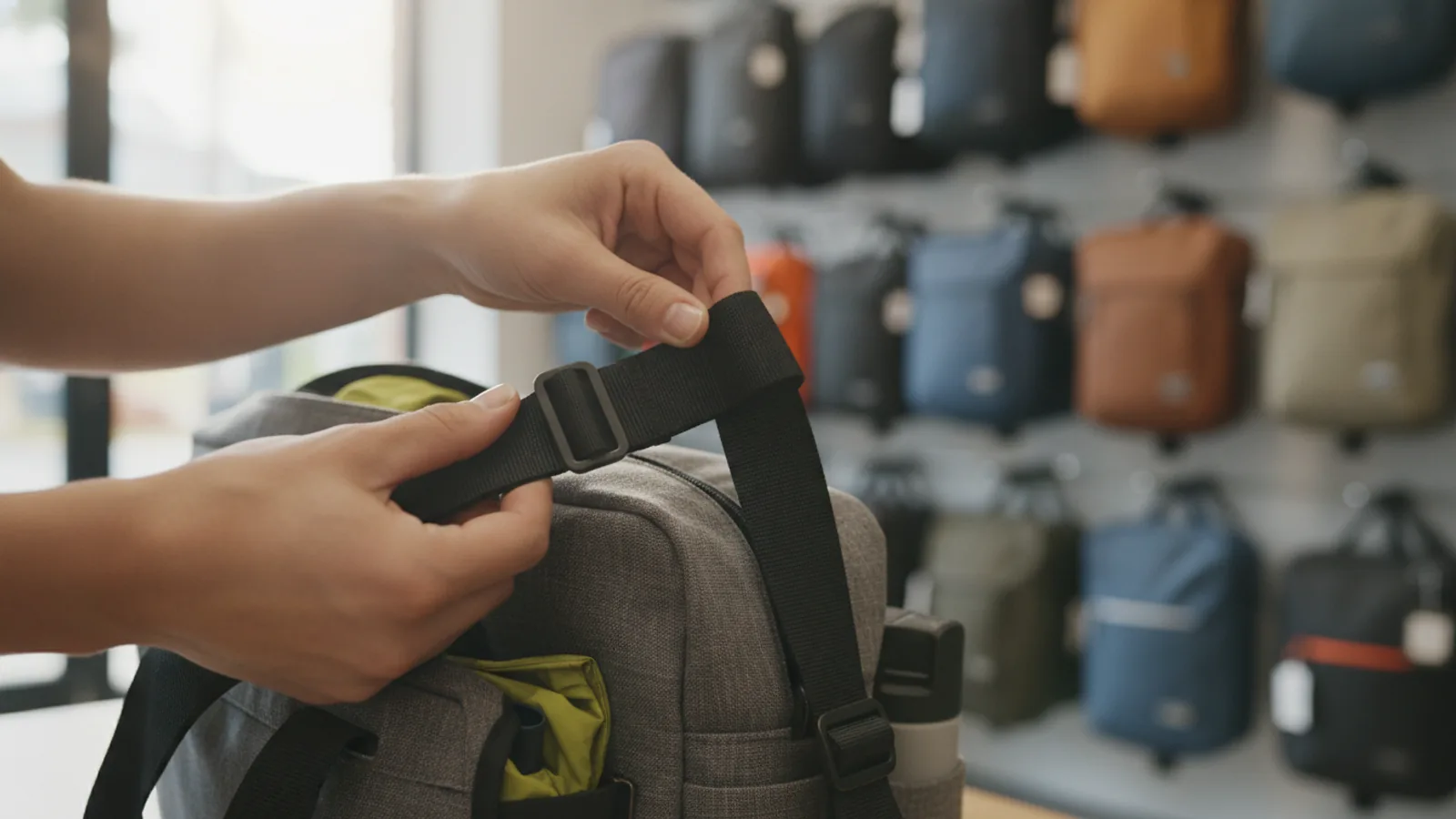
How To Assess Adjustable Straps When Buying A Day Bag
Properly assessing a day bag's adjustable straps is crucial for ensuring long-term comfort, usability, and durability. Beyond aesthetics, the straps dictate how weight is distributed across your shoulders and back, preventing strain and fatigue during extended use. This guide will walk you through examining the materials, hardware, and ergonomic design of straps to help you choose a bag that fits your body and your needs perfectly, avoiding common pitfalls like slipping buckles and inadequate padding.
Fast Answer
- Firmly pull on the adjusted strap with weight in the bag to ensure the buckles do not slip under load, which is key for a stable fit.
- Squeeze the shoulder padding to check for dense foam that won’t flatten immediately, ensuring lasting comfort during long periods of wear.
Before You Start
- Wear the type of jacket or coat you most frequently use to test the bag's fit accurately over different layers of clothing.
- Bring a few items, like a filled water bottle and a heavy book, to simulate a realistic weight load inside the bag.
- Identify your primary use for the bag, such as daily commuting, light hiking, or travel, as this will influence your strap requirements.
- Take a moment to consider your preferred carrying position, whether high on the back for stability or lower for easy access.
Step-by-Step Instructions
Examine Strap Material and Padding
Begin your assessment by closely examining the strap's primary materials: the webbing and the padding. Good quality webbing feels dense, tightly woven, and slightly stiff, resisting stretching or fraying. Run your fingers along its entire length, checking for a smooth, consistent texture. Next, focus on the padding. Instead of just looking at its thickness, squeeze it firmly between your thumb and forefinger to gauge its density. High-density foam will resist compression and spring back quickly, while low-quality foam will feel airy and flatten easily. This practical check is crucial because dense padding distributes weight more effectively across your shoulders, preventing painful pressure points after hours of wear. Insufficient or flimsy padding will compress under a load, offering little to no support and leading to discomfort, so ensuring its quality from the start is a key step in finding a truly comfortable bag.
Check the Buckles and Sliders
The hardware, including sliders, buckles, and clips, is what makes the straps truly adjustable. You must test these components for both ease of use and reliability. Start by sliding the main adjustment buckle back and forth along the webbing. It should move smoothly when you intend to adjust it but not so easily that it could slip on its own. Now, add some weight to the bag and put it on. With the strap adjusted, gently bounce the bag and pull on the strap to simulate the forces of walking. A practical check is to see if the slider moves or 'creeps' down the webbing under this tension. If it does, it will be a constant source of frustration. This check matters because hardware that fails to hold its position negates the purpose of adjustability, causing the bag's fit and weight distribution to change as you move, which can lead to imbalance and strain.
Assess the Full Range of Motion
A bag's versatility is heavily dependent on the full adjustment range of its straps. Before even trying it on, take each shoulder strap and extend it to its absolute maximum length, then shorten it to its minimum length. This gives you a clear idea of the operational limits. Now, perform a practical check by trying the bag on at both extremes. With the straps fully shortened, does the bag sit comfortably high on your back without feeling restrictive? With them fully extended, can it hang low enough to be easily swung around to your front, or does it accommodate a bulky winter coat? This assessment is critical because it determines whether the bag will be usable year-round, adapting from a thin shirt in the summer to thick layers in the winter. A limited range can make a bag impractical for different seasons or prevent it from being shared with someone of a different body size.
Investigate Strap Attachment Points
The points where the straps connect to the body of the bag are subjected to the most stress. A failure here renders the bag unusable, so a careful inspection is mandatory. Locate these anchor points, typically at the top and bottom of the back panel. Look closely at the stitching pattern. You should see dense, heavy-duty stitching, often in a square or rectangular box shape with an 'X' across it (a box stitch) or a series of tight, overlapping stitches (a bar tack). As a practical check, gently but firmly tug on each strap near the anchor point while observing the seam. There should be no signs of stretching, thread pulling, or fabric puckering around the stitching. This check is vital because it directly assesses the bag’s structural integrity and its ability to handle a full load without tearing. Weak anchor points are a common defect in poorly made bags and a clear indicator of low durability.
Perform a Loaded Comfort Test
Evaluating a bag while it's empty is misleading. To truly assess the straps, you must simulate real-world conditions with a representative weight. Use the items you brought—like a water bottle, a heavy book, or a tablet—to load the bag. Aim for a weight that reflects your typical daily carry. Once loaded, put the bag on and adjust the straps for a snug, comfortable fit. Now, perform a comprehensive comfort test. Walk around the store for a few minutes, swing your arms naturally, bend over as if to tie your shoes, and reach up. Pay close attention to how the straps feel on your shoulders and collarbones. The critical check is to identify any specific pressure points, areas where the straps dig in, or if one strap tends to slide off your shoulder. This matters because it reveals how the bag will perform during actual use, beyond a simple static fitting, ensuring all-day comfort.
Review Additional Adjustment Features
Beyond the main shoulder straps, many day bags include secondary straps that significantly enhance stability and comfort. The most common is the sternum strap, a small strap that connects the two shoulder straps across your chest. Locate this feature and test its buckle and vertical adjustability on its track. Also look for load lifter straps, which are smaller straps connecting the top of the shoulder straps to the top of the bag. A practical check involves putting on the loaded bag, connecting the sternum strap, and gently tightening the load lifters if present. You should feel the bag pull closer to your upper back, improving balance. This matters because these features prevent the shoulder straps from splaying outwards and shifting the load away from your center of gravity. A well-placed, adjustable sternum strap is particularly crucial for active use like cycling or fast walking.
Quick Reference
| Situation | Action | Why it helps |
|---|---|---|
| The strap padding feels too thin. | Squeeze the padding between your thumb and forefinger. It should feel dense and spring back quickly rather than flattening completely. | Thin or low-density padding will compress under load, offering no real cushioning and creating painful pressure points on your shoulders. |
| The adjustment buckle keeps slipping. | Put a representative weight in the bag, adjust the strap, and pull down firmly on it to see if the hardware holds its position securely. | Slipping hardware requires constant readjustment, which is frustrating and compromises the bag's fit and stable weight distribution. |
| The bag seems to fit poorly. | Check the full adjustment range by extending and shortening the straps completely to see if they can accommodate your body size and bulky clothing. | A limited adjustment range means the bag may only be usable in certain seasons or won't fit correctly if your layers of clothing change. |
Common Issues
- Strap edges are sharp and chafe skin.: Prioritize straps with rolled or fabric-bound edges that create a smooth surface. For an existing bag, you can purchase aftermarket strap covers or pads that wrap around the strap.
- Excess strap webbing dangles and gets caught.: Look for bags that have built-in elastic loops or hook-and-loop tabs to secure the loose ends. Alternatively, you can buy strap keepers separately to manage the excess length.
- Plastic hardware feels brittle or cheap.: Gently squeeze the buckles and sliders. They should feel solid and not creak or flex excessively. Opt for hardware made from robust polymers or metal components for greater longevity.
Advanced Tips
- Consider how the strap's material will interact with different jacket fabrics; some smooth webbing can slide off slick rain jackets.
- Evaluate if the width of the strap is appropriate for the bag's volume and intended maximum load; wider straps distribute heavy weight better.
- Check if the straps are removable or replaceable, which adds versatility and allows you to swap them out if they become damaged.
Final Checklist
- Strap padding is dense and covers the entire shoulder contact area.
- Adjustment hardware slides smoothly but locks securely under tension.
- Stitching at all strap anchor points is heavily reinforced and clean.
- The bag is comfortable to wear for several minutes with a realistic load.
FAQ
Why is strap padding so important?
Strap padding is critical because it distributes the bag's weight across a wider surface area on your shoulders. Without adequate, dense padding, the weight concentrates into narrow lines, creating pressure points that can lead to pain, muscle fatigue, and even restricted circulation over time. Good padding acts as a shock absorber and cushion, making a heavy load feel significantly more manageable and comfortable for extended periods.
What is a sternum strap and do I need one?
A sternum strap is a small, adjustable strap that connects the two main shoulder straps across your chest. Its primary purpose is to prevent the shoulder straps from sliding outwards and off your shoulders, especially during active movement like hiking, running, or cycling. It also helps distribute some of the load's pressure across your chest. You need one if you plan to be very active with your bag or if you often find that straps slip off your shoulders.
How do I know if the straps are the right length for me?
The straps are the right length if they allow the bag to sit comfortably in your desired position, both with and without a bulky jacket on. When adjusted, the bag should feel secure and not swing around excessively as you walk. A good test is to see if you can adjust it to sit high between your shoulder blades for stability, as well as low enough to be easily accessed without taking it fully off. If the straps are too short or too long at their limits, the bag will not be versatile.