How To Compare Multipack Prices When Pack Sizes Differ
A practical step-by-step guide to how to compare multipack prices when pack sizes differ, including preparation, instructions, common issues, tips, and next steps.
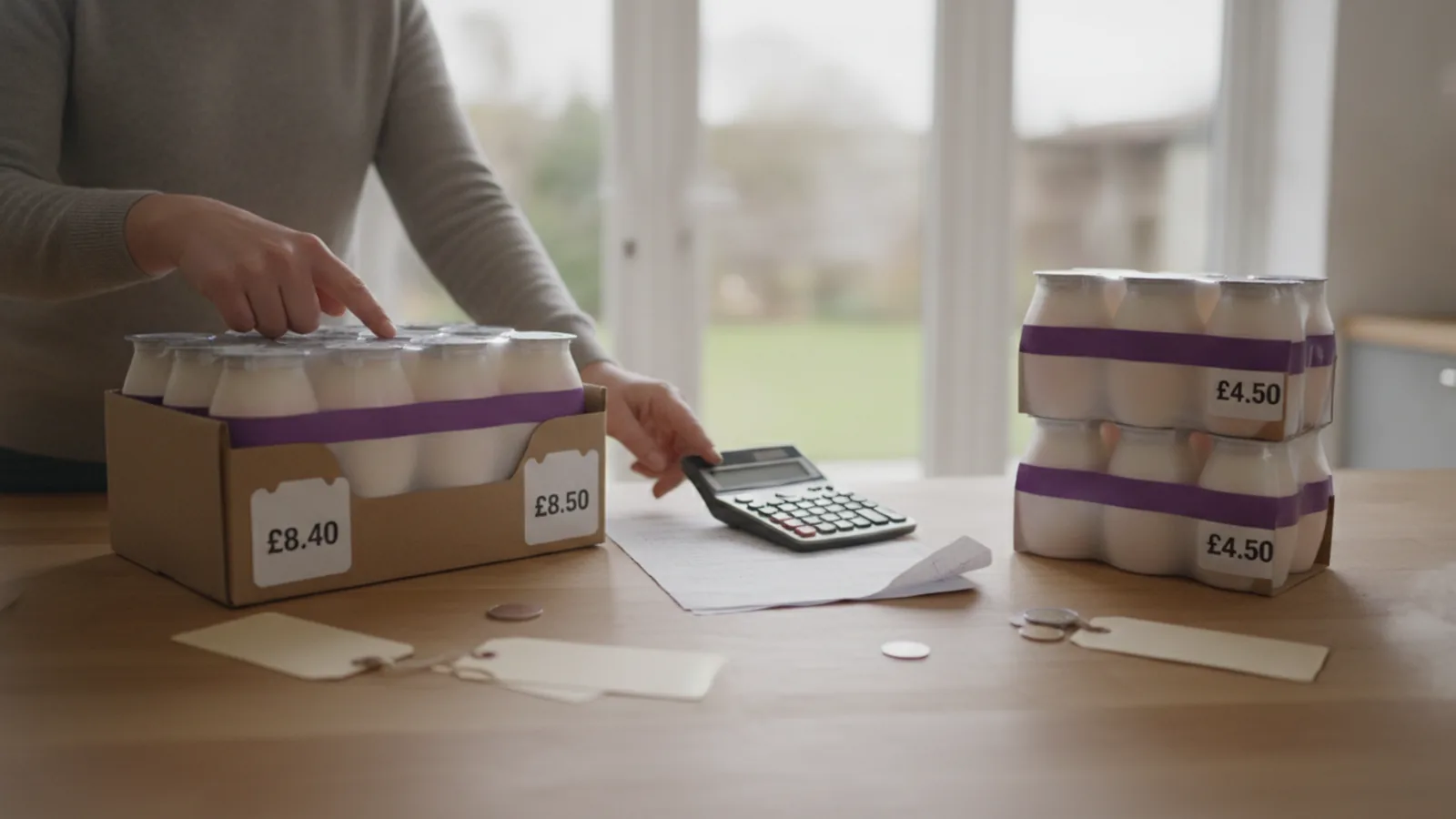
How To Compare Multipack Prices When Pack Sizes Differ
Comparing multipack prices for items with different quantities can be confusing. This guide teaches you a simple, reliable method to determine the true value of each option by calculating the unit price. By finding the cost per individual item, you can make informed purchasing decisions and ensure you get the best deal, regardless of the package size or promotional offers.
Fast Answer
- To compare different multipacks, calculate the unit price for each. Divide the total price by the number of items in the pack.
- Find the 'price per unit' on the store's shelf label, which often does the calculation for you, allowing for a direct comparison.
Before You Start
- A calculator or a smartphone with a calculator app to perform simple division.
- The total price and the total item count for each multipack you are comparing.
- A pen and paper or a note-taking app to jot down the unit prices for comparison.
- Patience to locate the necessary information on the packaging or shelf labels.
Step-by-Step Instructions
Identify the Total Price and Quantity
Begin by locating the total price and the total number of items for the first multipack you want to evaluate. This information is typically printed clearly on the product packaging or the shelf label directly below the product. The price will be the final cost you pay at the register, and the quantity might be listed as a count, weight, or volume. For example, a pack might say '12 bars' or '8 cans.' Make sure you are looking at the correct information for the specific item, as shelf layouts can be confusing. As a practical check, confirm that the quantity unit is consistent across all products you are comparing; for example, compare ounces to ounces, not ounces to grams. This check is vital because comparing different units of measurement without conversion will lead to an inaccurate and misleading price comparison, defeating the purpose of your effort to find the best value.
Calculate the Unit Price
Once you have the total price and the total quantity, the next action is to calculate the unit price. This is the cost for a single item within the multipack. Use your calculator and divide the total price by the total number of items. For example, if a pack costs a certain amount and contains 10 items, you divide the price by 10. The resulting number is the cost per individual item. Write this number down or enter it into your note-taking app, clearly labeling which product it belongs to. To ensure accuracy, perform the calculation twice. A simple mistake, like a misplaced decimal point, can completely change the outcome. This double-check is crucial because it validates your math, ensuring that the foundation of your comparison is correct. An error at this stage will render all subsequent comparisons invalid, potentially causing you to choose the more expensive option by mistake.
Repeat for the Second Product
Now, repeat the exact same process for the second multipack you are considering. Find its total price and total quantity from the packaging or shelf label. Be just as careful to ensure you are reading the correct information, especially if the products are placed close together on the shelf. After you have identified these two key figures, calculate the unit price for this second product by dividing its total price by its item count. Record this new unit price next to the first one you calculated, again making sure to label it clearly. As a practical check, quickly glance back at the product on the shelf to confirm you noted the correct quantity—for example, that you didn't mistake a 6-pack for an 8-pack. This verification is important because package designs can be similar, and it's easy to misread the count in a hurry, which would skew your results significantly.
Compare the Calculated Unit Prices
With the unit prices for at least two different multipacks calculated and recorded, you can now make a direct comparison. Place the numbers side-by-side and determine which one is lower. The product with the lower unit price offers the better value, as you are paying less for each individual item within the pack. For instance, if Product A has a unit price of 0.50 and Product B has a unit price of 0.45, Product B is the more economical choice. This step is the core of the entire process, where your calculations translate into a clear purchasing decision. As a check, re-read your labels to make sure you are comparing the same products. Sometimes different flavors or varieties of the same item have different prices. This check matters because it ensures you are making a true 'apples-to-apples' comparison, preventing you from accidentally concluding that a premium variety is cheaper than a standard one.
Factor in Usability and Expiration
The lowest unit price is not the only factor to consider. Before making your final decision, think about your actual consumption needs and the product's expiration date. Buying a very large multipack might offer the best unit price, but it becomes a poor value if you cannot use all the items before they spoil or expire. Consider your household's typical usage rate. Will you genuinely consume all 48 yogurt cups before they go bad? Is there enough storage space for the bulk package? As a practical check, find the expiration date on the packaging of the larger, cheaper option. This check is crucial because purchasing more than you can use results in waste, which effectively increases the cost of the items you actually consume. The money saved on a low unit price is lost if a portion of the product ends up in the trash, making the smaller, slightly more expensive pack the better financial choice in reality.
Account for Quality and Preference
Finally, value is not determined solely by price. Consider the qualitative differences between the products you are comparing. Even if a generic brand has a lower unit price, you might prefer the taste, effectiveness, or ingredients of a specific brand. Sometimes, a slightly higher cost is worthwhile for a product you enjoy more or trust. Ask yourself if the savings are significant enough to switch from a product you know and like. There is no right or wrong answer; it is a personal judgment. As a check, think about past experiences. Have you tried the cheaper alternative before and been disappointed? This reflection is important because personal satisfaction is a key component of value. Saving a small amount of money on a product that you dislike or find ineffective is a false economy, as it may lead to dissatisfaction or the need to purchase a replacement item anyway.
Quick Reference
| Situation | Action | Why it helps |
|---|---|---|
| Comparing items sold by count. | Divide the total price by the number of individual items in the pack (e.g., 12 cans, 24 batteries). | This calculation reveals the cost for a single unit, providing a direct and simple basis for comparison. |
| Comparing items sold by weight/volume. | Divide the total price by the total weight or volume (e.g., ounces, pounds, liters) to find the price per unit of measurement. | This standardizes the cost across different package sizes, making it easy to see which offers more product for your money. |
| A shelf tag already shows a unit price. | Trust the store's calculation but double-check that the unit of measure (e.g., per ounce, per 100g) is the same for all items being compared. | Using the store's pre-calculated unit price saves time, but inconsistent units can be misleading if not verified. |
Common Issues
- Comparing different units of measurement.: Convert one of the units to match the other before calculating the price. For example, if one item is in ounces and the other is in pounds, convert pounds to ounces (1 pound = 16 ounces) for an accurate comparison.
- Complex 'buy X, get Y' offers.: Calculate the final price for the total number of items you would receive. For a 'buy one, get one free' offer, you get two items for the price of one. Divide that single-item price by two to find the true unit cost.
- Forgetting to factor in coupons.: Subtract the value of any applicable coupons from the total price *before* you divide by the quantity. This ensures the unit price reflects your actual out-of-pocket cost and leads to the most accurate value assessment.
Advanced Tips
- Calculate the 'cost to get through a month'. A cheaper unit price on a product you use faster may be more expensive over time.
- For items sold by weight, like meat or produce, the price per pound or kilogram is your unit price. Use this for direct comparisons.
- Factor in 'cost per use'. A concentrated detergent with a higher price might have a lower cost per laundry load than a cheaper, diluted one.
Final Checklist
- Confirmed the total price and total quantity for each item.
- Calculated the unit price by dividing price by quantity.
- Considered product expiration dates and my household's actual usage.
- Compared identical units (e.g., price per ounce vs. price per ounce).
FAQ
What is the easiest way to do this in the store?
The quickest method is to look for the unit price on the shelf price tag, which is often printed in smaller text. It might say 'price per ounce' or 'price per each.' If it's there, the store has done the math for you. If not, use the calculator on your phone to quickly divide the total price by the item count.
Does this method work for liquid products?
Yes, the principle is identical. Instead of dividing by the item count, you divide the total price by the total volume, such as fluid ounces or liters. This gives you the price per unit of volume, allowing you to accurately compare a small bottle to a large jug of the same liquid.
What if the quality of the products is different?
Unit price is a tool for financial comparison, not a final rule. If the cheaper option is of lower quality, you must weigh the savings against the potential drop in performance or satisfaction. It's often wise to pay slightly more per unit for a product that works better or that your family prefers.